Rubbish Removal Costs Explained: What to Expect in 2024
Posted on 30/03/2026
Rubbish Removal Costs Explained: What to Expect in 2024 -- if you've ever stared at a stack of old furniture, a mountain of cardboard, or a shed full of mystery items and thought, "how much is this actually going to cost me?", you're in the right place. This guide breaks down real UK rubbish removal prices, the rules that affect them, and simple ways to save money without cutting corners. We'll go step-by-step, share insider tips, and make sure you know exactly what to expect this year.
In our experience, most people just want a fair price, a tidy result, and zero hassle. To be fair, that's exactly what you should expect. But 2024 brings a few changes: higher landfill taxes, stricter rules on upholstered furniture, and region-specific costs (London, we're looking at you). Don't worry -- we've got it all covered, clearly and honestly.
Why This Topic Matters
Getting Rubbish Removal Costs Explained: What to Expect in 2024 right isn't just about saving a few quid. It's about avoiding unexpected add-ons, preventing fines, and ensuring your waste doesn't end up dumped in a lay-by. The UK's waste system is regulated for good reason: environmental protection and public health. Price transparency is part of that story.
Truth be told, costs vary widely because disposal routes differ. A sofa with embedded foam (subject to POPs regulations) often cannot be recycled like ordinary furniture. Fridges contain gases that must be handled safely. Construction waste can be heavy and expensive to tip. And then there's location, access, and time. You get the idea.
In 2024, a few factors nudge prices upward or sideways:
- Landfill Tax: In England (2024/25), the standard rate is around ?103.70 per tonne. Wales and Scotland set their own rates but are broadly similar. This underpins disposal costs.
- POPs rules for upholstered seating: Sofas, armchairs, office chairs with foam often require specialist treatment. That's why sofa removal prices look different now.
- Transport and access costs: From Ultra Low Emission Zones to parking suspensions in busy streets, access matters. It's not just the waste -- it's getting to it safely and legally.
Ever tried clearing a room and found yourself keeping everything "because it might be useful"? Yeah, we've all been there. But once you know the levers that drive cost -- volume, weight, type, access -- you'll make sharper decisions, quicker. Clean, clear, calm. That's the goal.
Key Benefits
Understanding rubbish removal pricing delivers real-world benefits you can feel the moment the van drives off.
- Budget confidence: No bill shock. You'll know the typical ranges and what's fair before you book.
- Time saved: Choosing the right service first time (skip vs man-and-van vs council bulky) prevents delays and second visits.
- Legal peace of mind: You'll recognise a licensed carrier, ask for a Waste Transfer Note, and avoid fly-tipper headaches.
- Better environmental outcomes: Segregating waste and choosing compliant pros increases recycling rates and reduces CO2. It actually helps.
- Safety: Proper handling of heavy items and hazardous waste keeps you out of A&E. Simple but crucial.
One customer told us: "I was nervous about my old sofa because of those POPs rules. The team explained the charge, showed me the paperwork, and off it went. It was raining hard outside that day, but the relief was instant." That's the feeling we're aiming for.
Step-by-Step Guidance
Here's your practical, no-nonsense roadmap to get Rubbish Removal Costs Explained: What to Expect in 2024 from theory into action.
1) Identify what you're removing
- General household waste: Mixed junk, old toys, clothes, bric-a-brac.
- Bulky items: Sofas, mattresses, wardrobes, appliances.
- Construction waste: Rubble, timber, plasterboard, tiles.
- Garden waste: Branches, soil, turf, green waste.
- Hazardous or specialist: Paint, solvents, fridges/freezers, TVs, tyres, gas bottles, asbestos.
Tip: Separate the specialist items early. They often carry different disposal routes and prices.
2) Estimate volume and weight
- Volume is usually priced in cubic yards. One cubic yard is roughly the size of a washing machine or 9-10 standard black bin bags.
- Weight matters for dense waste (soil, rubble, tiles). Man-and-van services often include a weight allowance per volume band.
Reality check: People often underestimate volume by 20-50%. When in doubt, overestimate slightly, or send photos for a more accurate quote.
3) Photograph your waste
Stand back, take clear photos from multiple angles, include a doorframe or person for scale. You could almost smell the cardboard dust in the air when you see the pile properly -- that's the idea. Photos = realistic quotes.
4) Check access and parking
- Is there space to park a van? Any height restrictions?
- Are there stairs, no lift, or tight hallways?
- Do you need a parking permit or a temporary suspension?
Access issues add labour time. Mention them early to avoid on-the-day extras.
5) Shortlist licensed providers
- Verify Waste Carrier Licence status (England: Environment Agency, Wales: NRW, Scotland: SEPA, N. Ireland: DAERA).
- Look for clear pricing bands, recycling commitments, and real customer feedback.
It sounds dull, but this is where you dodge fly-tippers. A two-minute check saves months of hassle.
6) Compare quotes--like for like
Service models differ, and so do their costs in 2024:
- Man & Van Rubbish Removal (2024 typical UK):
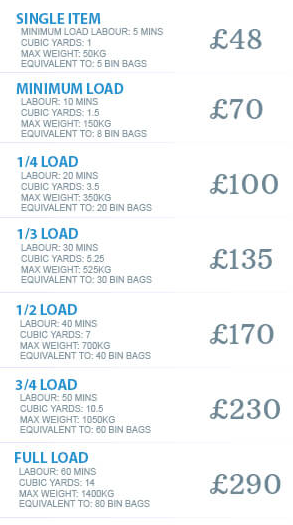
- Minimum charge: ?60-?90 (covers small loads/attendance).
- Quarter load (~3 cubic yards): ?90-?150.
- Half load (~6-7 cubic yards): ?160-?240.
- Three-quarter load (~9-10 cubic yards): ?220-?330.
- Full load (~12-14 cubic yards): ?280-?480.
- London and SE often 10-30% higher due to disposal and access costs.
- Skip Hire (2024 typical UK):
- 2-3 yard mini skip: ?120-?190.
- 4 yard: ?160-?230.
- 6 yard: ?220-?300.
- 8 yard: ?260-?360.
- 12 yard (light waste): ?360-?520.
- On-road permit (weekly): typically ?40-?90, plus possible bay suspensions in cities.
- Bulky Item Pricing (guide):
- Mattress: ?20-?40.
- Sofa/armchair (POPs): ?60-?120 depending on size and region.
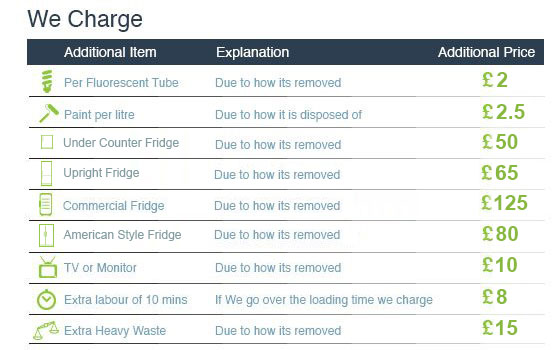
- Fridge/freezer: ?50-?90.
- Washing machine: ?30-?60.
- TV/monitor: ?25-?50.
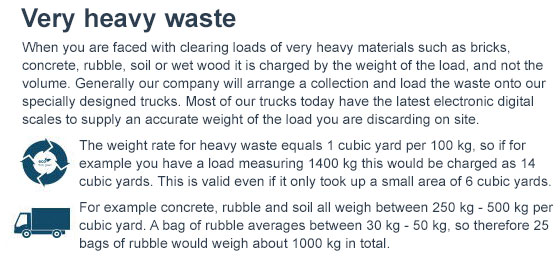
- Builders' waste by weight (rubble/soil often priced per tonne): ?150-?300 per tonne depending on region, access, and material quality (clean vs mixed).
- Bag-based services (e.g., 1-tonne bag collection): collection often ?100-?160 plus the cost of the bag itself.
Ask: "Is that all-in, including labour, disposal fees, and any item surcharges?" Get it confirmed in writing. Youll thank yourself later.
7) Ask about surcharges and exclusions
- Stairs/no lift or long carry distances.
- Evening/weekend call-outs.
- ULEZ/congestion zone costs (London).
- POPs furniture, fridges, mattresses, TVs.
- Loose plasterboard, paint, tyres, gas bottles, asbestos (specialist only).
Good practice: Reputable firms list these clearly. If it's vague, dig deeper.
8) Book smartly
- Pick midweek, off-peak times if you can. It can shave a bit off the price and reduce the rush.
- Confirm arrival windows and access arrangements. If you're in a permit zone, line that up in advance.
It's oddly calming when all the boring logistics are set. Suddenly, the job feels doable.
9) On the day
- Walk through the load with the crew. Confirm price before lifting starts.
- Keep pets and little ones away from moving items and tools.
- Have tools ready for simple dismantles (or request it in advance).
A quick five-minute chat saves misunderstandings. It's worth it.
10) After collection
- Request your Waste Transfer Note (WTN) for non-hazardous waste. It can be digital.
- For electricals/hazardous items, ask for proof of compliant processing.
- Keep paperwork for at least two years (domestic best practice; commercial duty requires it).
That single PDF proves you did the right thing. If something ever goes wrong down the chain, you're covered.
Expert Tips
- Pre-sort to save: Separating clean wood, cardboard, and metals can reduce mixed waste volume and cost. Flatten boxes. Snip cable ties. It's the small stuff.
- Bring items closer to the exit: If safe to do so, stage items near the door. Less labour time, less cost.
- Photograph accurately: Include tricky items like pianos or American-style fridges. Surprises create surcharges.
- Check POPs status: Sofas and chairs with foam cushions are almost certainly POPs. Expect a surcharge; plan for it.
- Think weather: Wet, heavy waste (rain-soaked carpet, soil) weighs more and may cost more. Cover it if rain's coming.
- Ask for recycling stats: Some operators will share recycling/diversion rates. It's a trust signal and frankly feels good.
- Combine jobs: Neighbours, housemates, or offices nearby? Split a skip or a van load and share costs. Community win.
- Avoid last-minute panics: Same-day is possible but often pricier. A day or two notice keeps quotes sensible.
Small moment: the sound of the front door closing after the last box leaves -- silence. Relief. You'll sleep better tonight.
Common Mistakes to Avoid
- Hiring unlicensed carriers: If they fly-tip your waste, you could be held responsible. Always check the licence.
- Underestimating volume: That "small pile" quickly becomes half a van. Use yardage estimates and photos.
- Ignoring access: No driveway? Busy road? Factor in parking, permits, or carry distance. Londoners, this is your big one.
- Mixing prohibited items: Plasterboard in general waste, paint tins, gas bottles -- these can halt a job or increase the bill.
- Skipping documentation: No Waste Transfer Note? No proof. Keep it tidy, keep it legal.
- Choosing the wrong service: A small skip for light rubbish might be overkill; a man-and-van can be cheaper and faster.
Ever thought, "It'll be fine," and then it wasn't? This is one area where ten minutes planning saves hours of faff.
Case Study or Real-World Example
Scenario: One-bed flat clearance in Zone 2 London, January 2024. Rainy morning, narrow stairwell, residents' permit street.
- Waste: 1 sofa (POPs), 1 double mattress, 10 bags of mixed junk, small wardrobe, TV, kitchen odds and ends, 6 broken-down boxes.
- Access: Second floor, no lift, corridor turns tight at the top. Permit arranged by resident. Van could park within 30m of entrance.
- Estimate: ~6.5 cubic yards, ~250-300 kg total weight.
- Quoted price: ?215 all-in for half load plus item surcharges: sofa POPs ?45, mattress ?25, TV ?20. Total ?305.
- On-day adjustments: None. Photos and access notes were clear.
- Time on site: 55 minutes, two-person crew.
- Documentation: WTN emailed within an hour, recycling rate stated 88% diversion.
Customer note: "I wasnt expecting the sofa surcharge, but they'd explained it beforehand so there were no surprises. I made tea, they cracked on, job done. Honestly smooth."
Tools, Resources & Recommendations
- Measuring tools: Tape measure, or your phone's AR/LiDAR app, to gauge cubic yards. Aim for accuracy, not perfection.
- Weight sense-check: Soil and rubble get heavy fast. If you can't lift a bucket comfortably, the tonnage adds up.
- Waste category list: Keep a quick list of what counts as hazardous (paints, oils, batteries, fridges).
- Photo checklist: Take shots from two corners of the room, plus close-ups of big items.
- Provider shortlists: Look for licensed carriers with clear price bands and itemised surcharges in plain English.
- Skip or Van decision guide:
- Choose a skip for steady DIY or heavy rubble over several days.
- Choose man-and-van for quick removals, mixed waste, or tricky access.
- Choose bag collections for smaller, predictable loads you can fill slowly.
- PPE and safety: Gloves, sturdy shoes, dust masks for lofts or attics. Your back will thank you.
One tiny hack: write the cubic yard guess on a sticky note and put it by the kettle. Every time you see it, you'll reality-check it. Sounds daft, works a treat.
Law, Compliance or Industry Standards (UK-focused if applicable)
UK waste law isn't just bureaucracy -- it keeps communities clean and the environment protected. Knowing the basics helps you avoid risks and pick trustworthy providers.
- Duty of Care (Environmental Protection Act 1990, s34): You're responsible for your waste until it's properly disposed of. Choose licensed carriers and keep your paperwork.
- Waste Carrier Licence: Required for businesses transporting waste. Check on the Environment Agency (England) or devolved nation registers.
- Waste Transfer Notes (WTNs): For non-hazardous waste collections. Must include date, addresses, description of waste, SIC code (for businesses), and carrier details. Keep for two years.
- WEEE Regulations: Applies to electricals and electronics (fridges, TVs, computers). Special processing required.
- POPs (Persistent Organic Pollutants) rules: Many upholstered items (sofas, office chairs) require specific handling and cannot be reused or landfilled in the usual way. Expect separate charges.
- Landfill Tax (2024/25): Standard rate in England approx ?103.70/tonne. Scotland and Wales have similar regimes. This cost flows through the market.
- Plasterboard (gypsum): Must be kept separate from biodegradable waste to prevent harmful gas formation. Never mix it into general skips without guidance.
- Asbestos: Specialist licensed removal and disposal only. Do not touch it; do not bag it yourself.
- Skip permits and parking suspensions: Required for on-road skips. Councils set fees and durations.
- London considerations: ULEZ/LEZ charges can affect operator costs. Not huge, but they exist.
If a provider shrugs at documentation, walk away. The good ones are happy to show you the rules they follow. It's a trust thing.
Checklist
Before you get quotes
- List items. Note any POPs sofas, fridges, TVs, paint.
- Estimate volume (cubic yards) and rough weight.
- Take photos from multiple angles.
- Check access: stairs, lifts, parking, timings.
- Decide: skip, man-and-van, or bag service.
When comparing providers
- Confirm Waste Carrier Licence number.
- Ask for an all-in price and item surcharges in writing.
- Clarify weight limits and labour assumptions.
- Ask about recycling rates and documentation.
On the day
- Walk-through and agree final price before lifting starts.
- Keep hallways clear; secure pets; mind the weather.
- Take a quick photo of the empty area for your records.
After collection
- Receive your Waste Transfer Note (digital is fine).
- For WEEE/hazardous items, request appropriate proof.
- Store documents safely for at least two years.
Breathe. Enjoy the space. Make a cuppa. You earned it.
Conclusion with CTA
From Rubbish Removal Costs Explained: What to Expect in 2024, you now know the levers that move price: volume, weight, waste type, and access. You know what's fair, how to compare quotes, and how to avoid unnecessary surcharges. More importantly, you know how to keep it legal and kind to the planet.
Whether you're shifting a single sofa or clearing a full house, the calm comes from clarity. And you've got that now.
Get a free quote today and see how much you can save.
Whatever's next for you, may it feel lighter. Space made. Stress gone.


 Tipper Van - Rubbish Removal and Waste Collection Prices in Dulwich, SE21
 Luton Van - Rubbish Removal and Waste Collection Prices in Dulwich, SE21