How Technology is Transforming Rubbish Removal in the UK
Posted on 08/12/2025

Rubbish removal in the UK is changing fast. From AI route planning to smart bins and fully electric collection trucks, technology is reshaping how we clear, sort, and recycle waste. If you've ever booked a bulky waste pickup, tried to declutter a flat, or managed waste for a business, you'll feel the difference already: quicker responses, clearer quotes, fewer missed collections, and more transparency from start to finish. That's no accident. It's what happens when digital tools, data, and the circular economy finally click together.
In this long-form guide, we'll explore how technology is transforming rubbish removal in the UK, what it means for households and businesses, and exactly how to take advantage of it--today. We'll walk through making smarter bookings, keeping compliant with UK regulations, and cutting your carbon footprint without cutting corners. You'll also see real-world examples and a practical checklist you can use this week. And a small promise: no jargon you can't use. Just workable steps and honest insights.
Why This Topic Matters
Waste in Britain isn't going away. Households generated millions of tonnes last year, and UK businesses--from construction sites to small cafes--produce even more. Now add in tighter regulations, net-zero commitments, and rising disposal costs. The result? Pressure. On councils, on contractors, and on you. But there's good news: technology is changing the game. Not as a gimmick, but as a set of tools that make rubbish clearance faster, cleaner, and easier to trust.
When we talk about technology transforming rubbish removal in the UK, we're talking about concrete shifts you can actually feel:
- Digital booking & pricing: instant quotes based on item photos, weight estimates, and distance data.
- IoT & sensors: smart bins and weight tracking to prevent overflow and improve collection timing.
- AI & analytics: route optimisation and contamination detection to improve recycling rates.
- eRCVs & telematics: quieter electric trucks and real-time fleet visibility--hello, fewer missed bins.
- Robotics & optical sorters: faster sorting at materials recovery facilities (MRFs), with better quality recyclate.
- Digital waste tracking: end-to-end traceability that makes compliance easier and fly-tipping harder.
A small moment from real life: a Tuesday in Hackney, drizzle hanging in the air, a tenant messages a clearance company with four photos. A minute later, she has a fair price, the crew's ETA, and the promise of a digital waste transfer note. No haggling, no vague windows. Just clarity. You could almost smell the cardboard dust when they opened the storage cupboard--then it was gone. Clean, clear, calm.
Key Benefits
1) Speed and Convenience
Instant quotes from photos. App-based scheduling in two taps. Live ETAs and text alerts. That's the new baseline for digital rubbish clearance in the UK. For businesses, integrations with facility management software mean no more calling three suppliers to coordinate a one-off pickup. You'll feel the time savings on day one.
2) Lower Costs (and Fewer Surprises)
AI-driven route optimisation means fewer miles per collection and lower fuel costs--savings can be passed on as sharper pricing. Smart weighing and inventorying reduce overcharging and disputes. Also, predictive maintenance keeps the fleet in shape, so breakdowns (and rescheduling costs) drop.
3) Better Recycling and Reuse
Optical sorters, computer vision, and robotics take contamination down and purity up. Meanwhile, apps connect businesses and residents to reuse marketplaces. Not everything needs a skip; much can be donated or resold. The knock-on effect is higher diversion from landfill and better circular economy outcomes. Truth be told, it feels good to know your old desk is now being used by a local startup.
4) Transparency and Compliance
Digital Waste Transfer Notes (WTNs), chain-of-custody logs, and GPS-stamped photographs make it simple to prove duty of care. With the UK's digital waste tracking rolling out, everyone--from a builder in Birmingham to a cafe in Brighton--can show where waste went, not just where it left. Less paperwork, more certainty.
5) Lower Carbon, Less Noise
Electric refuse collection vehicles (eRCVs) and biomethane fleets typically cut CO2 and noise vs older diesels. That quiet whoosh at 6 a.m. in a London mews? That's the future, politely arriving on time. ULEZ-compliant vehicles also reduce local air pollutants, which matters for health as much as headlines.
6) Safer Operations
Telematics and wearable tech can detect harsh braking, fatigue, and near misses. Cameras and proximity sensors lower the risk to crews and the public. In MRFs, robotics take on risky tasks, leaving humans to supervise and troubleshoot.
Step-by-Step Guidance
Here's a practical, no-nonsense way to use technology to improve your next clear-out--at home or at work.
Step 1: Diagnose Your Waste
- Make a quick list of items: furniture, mixed bags, WEEE (electricals), hazardous (e.g., paint), or construction waste.
- Snap clear photos in daylight. Include size references (a chair next to a doorframe) so estimators can price accurately.
- Weighing? If you've got a bathroom scale, weigh small items; otherwise estimate using item type (tech platforms often help).
Ever tried clearing a room and found yourself keeping everything "just in case"? You're not alone. Start with a corner and work clockwise. Small wins compound.
Step 2: Choose a Tech-Enabled Provider
- Check licenses: ensure they hold a valid Waste Carrier, Broker or Dealer licence (Environment Agency).
- Ask about digital WTNs: they should issue electronic notes with EWC/LoW codes and destination details.
- Look for telematics & tracking: live ETAs, route optimisation, and GPS-job stamping reduce no-shows.
- Verify disposal partners: reputable MRFs or re-use partners, ideally with published diversion rates.
- Check vehicle compliance: ULEZ and clean-air zone readiness if you're in London, Birmingham, Bristol, etc.
Step 3: Get a Data-Backed Quote
- Send photos with brief descriptions and access notes (stairs, lift, parking). Be honest; it helps price fairly.
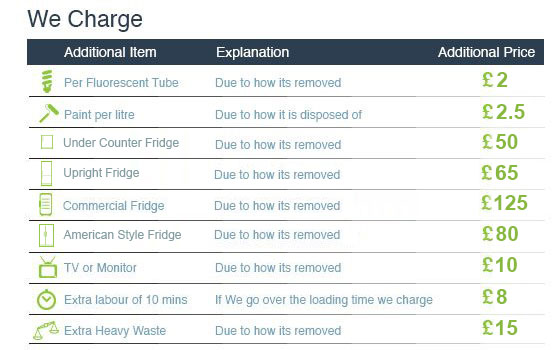
- Ask for a line-by-line cost breakdown, including labour time, disposal, and extras (mattress, fridge, hazardous).
- Confirm the recycling/reuse plan. Can furniture be donated? Can WEEE be refurbished? You'll reduce cost and carbon.
Step 4: Schedule Smartly
- Pick off-peak slots if flexible--some platforms reward quieter windows with better rates.
- Enable text/email alerts for ETA and proof-of-collection photos. You'll know exactly what left your site and when.
- If it's a business pickup, integrate with your facilities calendar and request a calendar invite for accountability.
Step 5: Prepare the Space
- Clear access routes, reserve parking, and label items to keep vs remove. Tape drawers shut to speed loading.
- For WEEE, remove personal data first. Ask about certified data wiping on any IT equipment.
- For construction, segregate wood, metal, and plasterboard--reduces contamination and cost.
A micro moment: It was raining hard outside that day, and you could smell the damp concrete in the hallway. Labelled bags saved the crew 15 minutes. That's real time, real money.
Step 6: Get Digital Proof
- Receive an electronic Waste Transfer Note with European Waste Catalogue (EWC/LoW) codes.
- Confirm the receiving facility and disposal method. Keep records for at least 2 years (3 for hazardous).
- Request carbon reporting if available--some providers estimate CO2 saved or equivalent metrics.
Step 7: Review and Improve
- Check your invoice against the WTN and photos. Query discrepancies early; digital trails make this easy.
- Note what worked: times, prep, labelling. Apply it next time. Progress, not perfection.
Expert Tips
Optimise With Data You Already Have
If you're a facilities or operations manager, export last quarter's collection logs. Look for patterns: which days overrun, which sites generate contamination, where collections double-up. Feed that into your provider's route planning--most will happily help if it lowers costs for both sides.
Use Smart Segregation
Simple, visible signage changes behaviour. Colour-code bins aligned to UK standards and add quick "what goes here" photos. Add QR codes that link to mini-guides. You'll cut contamination and improve recycling value. To be fair, most people want to do the right thing--they just need 10 seconds of clarity.
Prioritise Reuse Before Recycling
Ask your provider to route reusable items to charity partners or recommerce refurbishers. Sofas with fire labels, desks, white goods--there's a second life out there. You might even reduce disposal charges.
Go Electric Where It Counts
If you manage a small fleet, trial an eLCV for internal transfers or property clearances. In London's ULEZ, the savings stack up quickly when you avoid daily charges and benefit from lower fuel and maintenance.
Add Visual Verification
Request before/after photos for every job, attached to the WTN. It's standard practice now--and incredibly useful if you ever face a compliance audit.
Link Inventory to Clearance
For office moves, export an asset list from your facilities software and map it to the clearance manifest. Items with serial numbers (computers, screens) get tracked for secure data wiping and certification. Easy to prove, easier to sleep on.
Common Mistakes to Avoid
- Choosing on price alone. Ultra-low quotes can indicate poor disposal practices. If it sounds too good, it might be. Ask for licences and destination details.
- Skipping data wiping on IT assets. A cheap pickup can cost a fortune after a data breach. Demand certified erasure.
- Ignoring hazardous classifications. Paint, chemicals, fridges with refrigerants--these need special handling. Fines for mistakes are no joke.
- No paper trail. Or rather, no digital trail. Keep WTNs and consignment notes. The law expects it.
- Overfilling bins. Overflow fees and spillage clean-ups add cost and hassle. Use sensor alerts if offered.
- Forgetting access logistics. No parking = no collection. Protect your own schedule with a simple bay reservation note.
Yeah, we've all been there--standing with a crew outside a locked gate, calling three different numbers. Five minutes of planning saves an hour of faff.
Case Study or Real-World Example
Composite Case Study 1: London Flat Clearance--48% Faster, 22% Cheaper
Scenario: A two-bed flat in Walthamstow needed clearing after a quick move. The occupant used an app-based provider that offered photo-based pricing, live ETAs, and digital WTNs.
- Prep: Photos submitted (12 items 10 bags), access notes included (3rd floor, lift, on-street parking).
- Tech used: AI price estimator, route optimisation, electronic WTN, before/after photos.
- Outcome: Crew arrived within a 30-minute window. Reuse partners took two wardrobes and a desk; recycling handled the rest. Total time on-site: 55 minutes--around 48% faster than an older manual process benchmark. Cost came in 22% lower than the tenant's previous experience (fewer labour hours, no rescheduling).
Small detail: The crew laid down reusable floor protectors (less noise, less scuffing). The hallway never smelled like damp cardboard. Nice, right?
Composite Case Study 2: Midlands Warehouse--From Chaos to Compliance
Scenario: A mid-size logistics firm struggled with mixed waste, contamination, and missed pick-ups across three sites.
- Tech rollout: RFID-tagged bins, sensor alerts for fill levels, telematics on collection vehicles, and digital WTNs.
- Process changes: Segregation signage, 10-minute toolbox talks, monthly reporting with contamination photos.
- Results (first 6 months): 32% reduction in general waste, 18% increase in recycling rate, 0 missed pickups (sensor-driven scheduling), and audit-ready WTN history. Insurance questionnaire? A breeze.
One rainy Thursday, the ops manager walked the yard and noticed something odd: fewer birds. Less open waste, fewer torn bags. A clean site just feels safer.
Tools, Resources & Recommendations

Digital Platforms and Apps
- Rubbish removal apps: Many UK providers now offer photo-quote apps with instant pricing and calendar booking.
- Smart bin systems: Sensor-equipped containers (fill-level, weight, contamination alerts) for councils, estates, and business parks.
- Route planning & telematics: Software that optimises paths, reduces idling, and provides live ETAs.
Sorting and Processing Technology
- Optical sorters & robotics: Increase capture rates of paper, plastics, metals; reduce contamination.
- On-site compactors & balers: For high-volume generators; cut transport costs and improve recyclate value.
- Construction tools: Mobile crushers for rubble, plasterboard segregation, and timber recovery systems.
Compliance & Data
- Digital Waste Tracking (UK): Government-backed system rolling out from 2025, replacing fragmented paper trails.
- Electronic WTNs & consignment notes: Store safely for required periods; look for auto-populated EWC codes.
- Data erasure certificates: For IT assets; align with recognised standards and retain for audits.
Learning and Guidance
- WRAP & Recycle Now guidance: Trusted UK resources on recycling best practice and industry data.
- Environment Agency registers: Verify waste carrier licences and permitted waste sites.
- Local authority pages: Bulky waste rules, reuse partners, and household recycling centre guidance.
Law, Compliance or Industry Standards (UK-focused if applicable)
Core UK Regulations
- Environmental Protection Act 1990 & Duty of Care: You must take all reasonable steps to manage waste properly. Keep WTNs for at least 2 years (non-hazardous) and consignment notes for 3 years (hazardous).
- Waste (England and Wales) Regulations 2011: Apply the waste hierarchy: prevent, reduce, reuse, recycle, recover, dispose.
- Waste Carrier, Broker, Dealer Licensing: Anyone transporting or arranging waste transport must be licensed. Always check.
- Hazardous Waste & WEEE: Specific rules for electricals and hazardous streams (e.g., fridges, batteries, chemicals). Use proper EWC/LoW codes and permitted facilities.
- Construction & Demolition: Consider Site Waste Management best practices; PAS 402 can demonstrate responsible resource management.
Emerging and Complementary Requirements
- Digital Waste Tracking: National digital system rolling out from 2025 to track waste movements end-to-end.
- Extended Producer Responsibility (EPR) for Packaging: Phased introduction; businesses should monitor reporting duties and cost impacts.
- Clean Air & Low Emission Zones: ULEZ (London) and CAZs (e.g., Birmingham, Bristol) affect fleet choices and collection costs.
- Data Protection (UK GDPR): If handling customer or employee data on disposed devices, ensure compliant disposal with verifiable erasure.
Standards to Know
- ISO 14001: Environmental management systems--often a good sign a provider takes impacts seriously.
- BS EN 840: Standards for mobile waste containers (bin compatibility and safety).
- WEEE Treatment Standards (e.g., EN 50625 series): For proper treatment and depollution of electricals.
Bottom line? Technology helps you prove you've done the right thing--digitally, clearly, and on demand. Regulators appreciate that. So do insurers.
Checklist
- Take clear photos of items and access routes.
- Confirm the provider's Waste Carrier licence and insurance.
- Ask for digital WTNs with correct EWC codes.
- Verify where your waste will go (MRF, reuse partner, specialist facility).
- Clarify costs: labour, disposal, extras, parking.
- Schedule with live ETA alerts; prep the space and labels.
- Request before/after photos and carbon reporting if offered.
- Store documents securely for audits (2-3 years as applicable).
- Review outcomes and adjust segregation to reduce costs next time.
Conclusion with CTA
Technology isn't replacing people in rubbish removal--it's amplifying their best work. When crews have smarter routes, better vehicles, and live data, they spend less time in traffic and more time doing what matters: clearing your space safely, recycling more, and keeping costs fair. Whether you're a London flat-dweller, a Manchester cafe owner, or a facilities lead juggling five sites, there's a tech-enabled path that suits you.
Take the first step. Try one data-backed booking. Keep your WTN digital. Ask where your waste goes and why. You'll feel the difference the very next day--less fuss, more confidence. And, to be fair, a tidier hallway.
Get a free quote today and see how much you can save.
Here's to clearer rooms, cleaner streets, and a circular economy that actually works. One smart collection at a time.


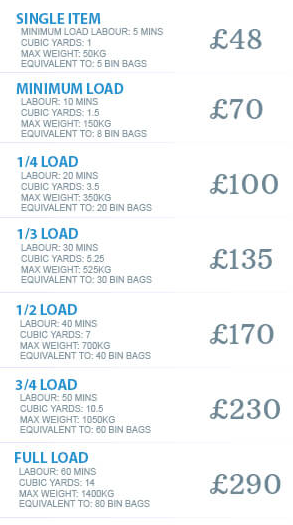
 Tipper Van - Rubbish Removal and Waste Collection Prices in Dulwich, SE21
 Luton Van - Rubbish Removal and Waste Collection Prices in Dulwich, SE21