Hidden Costs to Watch For When Booking Rubbish Removal
Posted on 01/01/2026

You book a rubbish removal, expect a simple pick-up, and then the invoice lands with a sting. Extra labour. Congestion charges. A mattress fee you weren't warned about. Sound familiar? Truth be told, the world of waste clearance can feel like a maze of line items. And to be fair, some are legitimate. Others... less so.
This long-form guide unpacks the hidden costs to watch for when booking rubbish removal in the UK. You'll learn exactly what drives pricing, which extras are fair (and which aren't), and how to book confidently with no nasty surprises. Think of it as your clear, calm, confident path to stress-free rubbish clearance.
One small micro moment: It was raining hard outside that day. You could almost smell the cardboard dust in the air. The crew turned up, lovely guys, but within minutes the bill grew: the sofa needed special handling, the lift was out, and parking was a nightmare. Yeah, we've all been there. Let's make sure it doesn't happen again.
Why This Topic Matters
Clear spaces help you think better. They also protect your health, improve safety, and make your home or workplace a nicer place to be. But the surprise costs that crop up with rubbish removal can sour the experience. And let's face it, no one wants to argue with a driver over parking at 7:30 a.m. on a Tuesday.
Understanding the hidden costs to watch for when booking rubbish removal isn't about becoming cynical; it's about becoming informed. When you know the pricing triggers--weight limits, parking, certain materials--you can plan smarter and spend less. This guide draws on industry practice across the UK, from London flats and suburban semis to construction sites and offices. It blends experience with regulation, so you'll be ready for whatever pops up--mattresses, fridges, POPs sofas, you name it.
Quick human aside: ever tried clearing a room and found yourself keeping everything "just in case"? Rubbish removal is a bit like that. Costs creep when details aren't sorted in advance. But you can do this. Clean, clear, calm. That's the goal.
Key Benefits
By learning the hidden fees in rubbish clearance and how to manage them, you'll gain:
- Predictable costs — fewer surprises on the day because you've planned for the usual add-ons.
- Better quotes — you'll ask the right questions, get fixed pricing, and ensure VAT and specialist items are included.
- Faster collections — pre-sorted items and reserved parking reduce on-site time and extra labour charges.
- Legal confidence — proof you've met duty of care, got a Waste Transfer Note, and used a licensed carrier.
- Greener outcomes — more reuse and recycling, fewer trips, and an easier conscience.
In our experience, when people understand the moving parts of pricing, they often save 10-30%--sometimes more. And peace of mind isn't bad either.
Step-by-Step Guidance
1) Audit what you're actually clearing
Walk through the space and list everything. Estimate volume (in cubic yards) and note weighty items (rubble, tiles, soil). Identify special items that often trigger surcharges:
- Mattresses
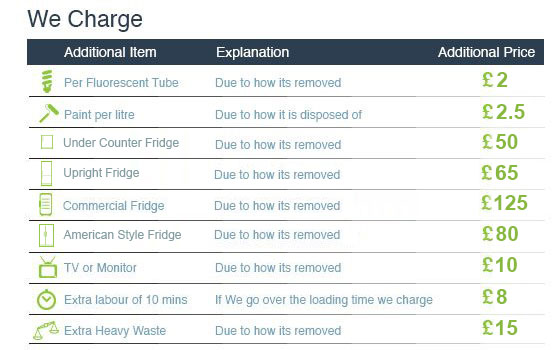
- Fridges/freezers (WEEE)
- TVs/monitors (WEEE)
- Fluorescent tubes
- Tyres
- Upholstered seating with POPs (Persistent Organic Pollutants) e.g., sofas, armchairs, sofa beds
- Plasterboard (gypsum)
- Paint, chemicals, oils (hazardous)
Take clear photos from different angles. A short 30-second video helps too. You'll use this to get a more accurate, fixed price quote.
2) Decide man-and-van vs. skip
Man-and-van rubbish removal is flexible, fast, and includes labour. Skips are better for heavy, ongoing work, but can require permits. Consider:
- Access: stairs, lifts, narrow streets
- Volume: intermittent loads suit man-and-van; multi-day projects may favour a skip
- Parking: skip permits can be costly; man-and-van may incur parking fees or fines if not planned
- Waste type: heavy construction waste may be cheaper by skip
A tiny micro moment: a client in Croydon thought skip hire would be cheaper for a small kitchen rip-out. By the time the permit and delivery fees stacked up, man-and-van with two trips was actually ?60 less. Wasn't expecting that.
3) Ask for an all-in, written quote
Insist on a written, all-inclusive quote based on your photos and inventory. Confirm it includes:
- VAT (if applicable)
- Labour time included (e.g., 20-30 minutes per cubic yard) and the rate for overruns
- Weight limit per load and charges if exceeded
- Stairs or long carry charges
- Parking, ULEZ, congestion, or any road-related costs
- Special item charges (mattress, fridge, POPs sofa)
- Waste Transfer Note and disposal documentation
- Cancellation or failed-collection fees
Ask for a fixed price "no surprises" quote wherever possible. If the company hesitates, that's a signal. Not necessarily bad, but proceed with questions.
4) Confirm access and parking in advance
Hidden costs love chaotic mornings. Avoid them by:
- Reserving a bay, arranging a visitor permit, or booking a parking suspension if needed
- Notifying building management about lift use, loading bays, or security
- Clearing pathways and bagging small loose items
- Removing doors/drawers to make bulky furniture easier to manoeuvre
In central London, also check for ULEZ and Congestion Charge implications. If the crew must park far away, long-carry fees can apply.
5) Sort, separate, and stage items
Pre-sorting reduces handling time. Group by type: wood, metal, cardboard, small electricals, soft furnishings. Keep hazardous or special items clearly labelled and separate.
Why it matters: labour overruns are a common extra. Ten minutes here, fifteen there... it adds up. Laying things out reduces time and stress--yours and theirs.
6) On the day: walk-through and sign-off
When the crew arrives, do a quick walk-through. Confirm the items match the quote, including special items and access. Ask for notice before any variation to price. After the job, request:
- A Waste Transfer Note (WTN) with the carrier's details and your waste description
- Photos of the load (before/after) if you want proof for your records
- A VAT invoice, if applicable
It's your legal duty to ensure waste goes to an authorised facility. Paperwork matters more than most people think.
Expert Tips
Know the usual "gotchas"
These are the hidden costs to watch for when booking rubbish removal that pop up again and again:
- POPs seating (sofas, armchairs) often incur higher disposal costs due to 2023 guidance requiring high-temperature destruction.
- Mattresses and fridges carry recycling/processing surcharges.
- Stairs, long carry, and poor access increase labour time beyond the included allowance.
- Parking tickets, permits, and waiting fees--particularly in busy boroughs.
- Weight limits on mixed waste loads; heavy rubble or soil can tip into a higher rate band.
- Plasterboard must be segregated; mixed loads with gypsum often attract a fee.
Be clear on cubic yards vs. weight
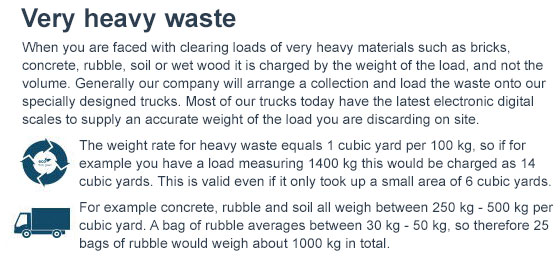
Most man-and-van services quote by volume (cubic yards), with a fair usage weight limit. Heavy materials--tiles, hardcore, wet wood--can trigger weight surcharges, even if the volume looks small. If you're clearing building waste, ask whether a weight-based quote is better.
Get it all in writing (including VAT)
One of the most common frustrations: a "great price" that doesn't include VAT. Always ask, "Is that including VAT?" You'll avoid the sudden 20% bump at checkout. And save the quote confirmation in your email--its your safety net.
Choose timing wisely
Mid-week, mid-morning slots are often smoother. Less traffic, easier parking, calmer crews. If you book very early or late, some operators add an out-of-hours fee.
Consider reuse before removal
Can something be donated or resold? Reuse often reduces your load size and costs. In our experience, separating out reusable furniture (clean and sturdy) can trim 10-20% off a removal. That's money back in your pocket--and feels good, frankly.
Common Mistakes to Avoid
- Not disclosing special items: Fridges, mattresses, and POPs sofas aren't "just another item". Failing to mention them leads to price changes on the day.
- Ignoring VAT: A quote that sounds cheap may not include VAT. Always confirm.
- No plan for parking: Drivers circling the block equals labour time creeping up. Or worse, a fine passed to you.
- Underestimating volume: "It's just a few bags" often isn't. Photos and a proper list prevent misquotes.
- Mixing plasterboard with general waste: Gypsum can't be landfilled with organic waste. Segregate it to avoid charges.
- Last-minute cancellations: Same-day cancellations often trigger call-out fees. Check the policy.
- Not checking licences and insurance: If your rubbish is fly-tipped and traced back, you could be liable. It happens more than you think.
Small confession: even organised people miss these. Don't beat yourself up--just prepare differently next time.
Case Study or Real-World Example
Central London Flat: How a ?120 quote became ?285
Scenario: One-bedroom flat clearance in Zone 2. The tenant had a sofa, small fridge, mattress, three bags of clothes, and a mix of cardboard and small appliances. Quote given over the phone: "From ?120 for half a load."
- POPs sofa surcharge: The crew identified the sofa as upholstered seating requiring specialist disposal. ?55.
- Fridge (WEEE): ?45 for compliant processing.
- Mattress: ?25 due to dismantling and recycling complexity.
- Stairs: The lift was out; a third-floor walk-up added 20 minutes beyond the included labour. ?20.
- Parking: No visitor permit ready; crew used paid parking, then a 10-minute overstay. ?15.
- VAT: The initial "from" price didn't include VAT. 20% on eligible items.
Total: ~?285. The client felt blindsided. Could it have been avoided? Mostly, yes. With photos upfront, a written all-in quote, and a parking plan, we reckon the final price might have been ~?200-?220. Not miraculous, but meaningful.
Another quick story: in Manchester, a light office clearance got cut by ?70 after the client pre-broke down desks and staged boxes near the lift. The crew was in and out in 25 minutes. Simple, human, efficient.
Tools, Resources & Recommendations
Tools to estimate and plan
- Volume calculator: Use a cubic yard guide (a standard domestic fridge is roughly 1 cubic yard) to estimate load size.
- Photo checklist: Take wide-room shots, then close-ups of special items (mattress labels, fridge serial if visible, sofa fabric).
- Parking plan: Check your council's visitor permit process or arrange a bay in advance.
- Item list: Note anything heavy or awkward. If it needs dismantling, say so.
Key questions to ask providers
- Are you a licensed waste carrier? (Ask for their registration number.)
- Is your quote fixed, all-inclusive, and including VAT?
- What labour time and weight are included per load?
- What are the charges for mattress, fridge/freezer, POPs sofas?
- Do you charge for stairs, long carry, or parking?
- Do you provide a Waste Transfer Note and disposal documentation?
- What's your cancellation policy?
Where to verify and learn
- Environment Agency public register (England): verify the waste carrier number.
- Natural Resources Wales, SEPA (Scotland), DAERA (Northern Ireland): equivalent registers by region.
- WRAP and Reuse Network: guidance and routes for donation and reuse.
- Your local council website: parking permits, skip permits, and household waste rules.
If a provider can't give a licence number or won't spell out costs in writing, walk away. Your wallet--and the environment--will thank you.
Law, Compliance or Industry Standards (UK-focused if applicable)
Your legal duty of care
Under the Environmental Protection Act 1990 (Section 34) and the Waste (England and Wales) Regulations 2011, you have a duty of care to ensure your waste is handled and disposed of properly. That means:
- Using a licensed waste carrier
- Describing your waste accurately
- Obtaining and keeping a Waste Transfer Note
If your waste is fly-tipped, it can be traced back to you via documentation or investigation. Fines can be hefty. Keep your paperwork for at least two years (commercial) and a safe period for householders too--common sense applies.

POPs seating (sofas and upholstered items)
From 2023 guidance, domestic upholstered seating that may contain POPs must be treated via high-temperature destruction. This has increased processing costs and reduced reuse options for certain items, driving those sofa surcharges you keep hearing about.
WEEE, hazardous and restricted materials
- WEEE (Waste Electrical and Electronic Equipment) Regulations 2013: special handling for fridges/freezers, TVs, monitors, and more.
- Hazardous waste (paints, solvents, oils) requires specific carriers and facilities. Expect higher charges.
- Plasterboard (gypsum) cannot be mixed with biodegradable waste in landfill.
Local charges and road schemes
Some areas have charges that legitimately appear on invoices:
- London Congestion Charge and ULEZ
- Skip permits for on-road skips (via councils)
- Parking suspensions or bay fees for loading zones
Not all companies pass these through; some bundle them into pricing. Ask, and get it in writing. Clear beats clever.
Checklist
- Make a full inventory with photos and note special items (mattress, fridge, POPs sofa).
- Decide man-and-van vs. skip based on volume, access, and waste type.
- Ask for a fixed, all-in quote including VAT and special item charges.
- Confirm labour time, weight limit, stairs/long-carry policy, and parking/road charges.
- Arrange parking or permits; notify building management about access.
- Pre-sort items and stage them near exits to cut on-site time.
- Get the Waste Transfer Note and keep it safely.
- Verify the waste carrier's licence number on the public register.
- Check cancellation and failed-collection terms in advance.
- Consider reuse or donation before disposal to reduce cost and waste.
Breathe. You're nearly there. This stuff gets easier once you've done it once.
Conclusion with CTA
The truth about rubbish removal pricing is simple: it's not the collection that stings, it's the unknowns. When you understand weight limits, special items, access, and paperwork, you take control. No more guesswork. No awkward driveway negotiations. Just a fair price for a job done right.
Whether you're clearing a garage in Guildford or an office in Shoreditch, use this guide to call the shots. Ask for written, VAT-inclusive quotes. Plan parking. Separate special items. And expect transparency--because you deserve it.
Get a free quote today and see how much you can save.
And when the space is clear and quiet, you'll feel it. A little more room to breathe. To start again.


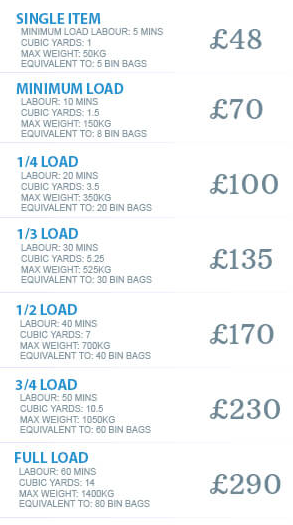
 Tipper Van - Rubbish Removal and Waste Collection Prices in Dulwich, SE21
 Luton Van - Rubbish Removal and Waste Collection Prices in Dulwich, SE21