Council Rubbish Services vs Private in London & Manchester Compared
Posted on 17/01/2026
Council Rubbish Services vs Private in London & Manchester Compared is a decision almost every household and business faces sooner or later. Do you wait for the council's scheduled collection, or book a private rubbish removal for tomorrow morning? Is it cheaper to subscribe to garden waste with your borough, or just ring a man-and-van after a big clear-out? And what about compliance, permits, ULEZ charges, and the dreaded waste duty of care--who handles what?
In this long-form, expert guide, we break down how council and private waste services actually operate in London and Manchester, what they cost, where they shine, and when they fall short. You'll get practical, step-by-step advice to choose the right option for your situation--household or commercial--without wasting time, money, or sleep. We've included local context, UK law, lived experience, and real numbers. It's comprehensive, but never boring. To be fair, rubbish can be oddly satisfying when it's handled right.
Why This Topic Matters
Rubbish is simple until it isn't. A few extra bags after a flat move, an office fit-out in Shoreditch, or a cafe refit off Deansgate--and suddenly you're comparing council rubbish services vs private while standing in a hallway that smells faintly of cardboard dust. In our experience, the right choice depends on what you're throwing away, how much you have, how quickly you need it gone, and where you are in London or Manchester.
Getting this decision right saves you money, reduces hassle, and keeps you compliant with UK law. It also improves recycling rates and lowers emissions if you choose a carrier with modern, low-emission vehicles. When you zoom out, the question--council rubbish collection versus private waste removal--is really about convenience, cost, compliance, and carbon. And yes, peace of mind. Clean, clear, calm. That's the goal.
Ever tried clearing a room and found yourself keeping everything "just in case"? The same happens with waste choices--people put it off, and costs creep up. This guide cuts through that indecision with clear, local, practical advice.
Key Benefits
Comparing Council Rubbish Services vs Private in London & Manchester gives you a toolkit to choose with confidence. Here's how the benefits stack up:
- Cost control: Councils often offer subsidised services (especially for standard bin rounds and sometimes bulky items). Private firms can be cost-effective for larger mixed loads or tight schedules.
- Speed & flexibility: Private waste collectors typically offer same-day or next-day slots, evening collections, and weekend availability. Councils operate on fixed routes and schedules.
- Scope of items: Councils restrict what you can put in each bin and in bulky collections. Private providers usually accept a wider range--DIY rubble, white goods with de-gassing, WEEE, office furniture, and more--often with proper documentation.
- Compliance & paperwork: Private operators should provide a Waste Transfer Note (WTN) and be registered with the Environment Agency. Councils are automatically compliant by statute.
- Environmental performance: A good private company can match or beat council recycling rates through sorting facilities. In London, fleets that meet ULEZ standards reduce emissions--less soot, less noise on your street.
- Business continuity: For shops, cafes, and offices, trade waste from a reliable provider prevents fines and keeps premises tidy. Councils also offer commercial contracts (Section 47), but private routes may align better with your opening hours.
- Transparency: Council fees and services are published. Private firms give quoted prices with breakdowns--especially helpful when you've got unusual items.
Truth be told, there's no single "best" option. There's the best option for you, today. And tomorrow might be different.
Step-by-Step Guidance
Use this straightforward process to compare council rubbish collection and private waste removal in London and Manchester--and pick a winner for your situation.
1) Define your waste clearly
- Type: Household general waste, recycling, garden cuttings, builders' rubble, WEEE (fridges, microwaves), furniture, confidential papers, hazardous paints? Categorise it.
- Volume: Estimate in bin bags, cubic yards, or "van loads." A small van load is roughly 3-4 cubic yards; a 6-yard skip is similar to 60-70 bin bags (approx.).
- Access: Stairs, lift, basement, or tight mews? Note parking restrictions, loading hours, and whether items need dismantling.
Micro moment: It was raining hard outside that day; the driver waited, then quietly carried a soggy mattress down three flights. Preparation matters.
2) Check what your council covers by default
- London: Each borough sets its own rules for standard bins, recycling, and bulky waste. Many offer paid bulky collections; a few provide limited free collections. Garden waste is often a paid annual subscription. Timings are fixed and may take 1-3 weeks for bulky items.
- Manchester: Manchester City Council (and other Greater Manchester districts) publish schedules for domestic bins and offer bulky collections with limits and fees that vary by item. Lead times can be similar--book early.
Expect restrictions: TVs, fridges/freezers, and construction rubble are often excluded or limited via councils. If it's urgent or unusual, private may be simpler.
3) Compare costs realistically
- Council domestic bins: Included in your council tax (with strict rules on what fits). Overfilled bins or side waste often won't be taken.
- Council bulky waste: Typically a fee per item or per collection. Price ranges vary widely; budget roughly ?10-?60 depending on borough/district and item type.
- Garden waste subscriptions: Often ?40-?100 per year for a bin collected fortnightly in season. Check local rates.
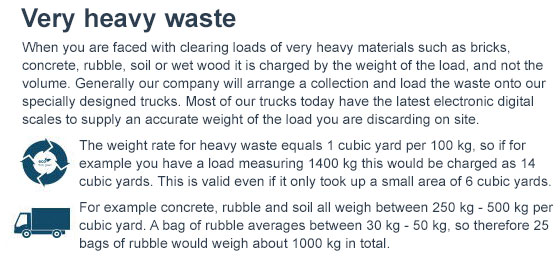
- Private man-and-van clearance: Usually charged by volume/weight. As a broad guide, small loads may start ?60-?120; half-loads ?150-?250; full loads ?300-?500+. Heavier materials (soils, rubble) cost more.
- Skip hire (London & Manchester): A 6-yard skip might range ?180-?300+, plus council highway permits ?40-?150 depending on area and duration. In central London, add potential Congestion/ULEZ costs and parking suspensions.
- Trade waste (businesses): Council and private contracts price per bin size and frequency (e.g., 240L, 660L, 1100L). Bags may be ?1.50-?3.50 each; wheelie collections vary widely. Always check minimum terms.
Note: These are indicative ranges compiled from typical market pricing. Actual quotes depend on access, time, waste type, carrier, and location. Always ask for a firm estimate with what's included.
4) Audit compliance
- Check licences: Any private provider must be a registered waste carrier with the Environment Agency. Verify on the public register.
- Ask for a WTN: A Waste Transfer Note (or electronic equivalent) should confirm where your waste goes and the EWC codes used. Keep it for at least two years.
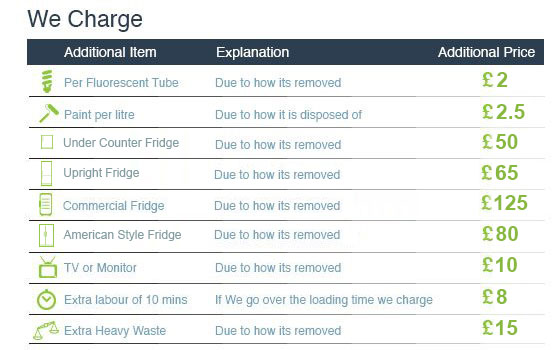
- Hazardous items: Fridges/freezers need specialist handling and a consignment note. Fluorescent tubes, paints, and batteries follow strict rules.
This isn't paperwork for paperwork's sake--it's protection. If your waste is fly-tipped, you could be questioned. Keep the trail clean.
5) Consider timing, access, and emissions
- Timing: Council: fixed windows. Private: often same-day/next-day, sometimes evenings.
- Access: Note parking restrictions, lift use, loading zones, and Congestion/ULEZ charges. Some private firms bake those fees into quotes; others pass them on.
- Emissions: In London, ULEZ-compliant fleets reduce impact and risk of surcharges. In Manchester, check whether your provider invests in newer vehicles and efficient routing.
6) Decide: Council vs Private (by scenario)
- Small, non-urgent household items: Council bulky collection can be cost-effective if you're happy to wait.
- Urgent clear-out or mixed waste (move-out, end of tenancy): Private man-and-van is faster and usually simpler.
- Garden waste over a season: Council subscription is usually cheaper than ad-hoc private trips.
- Builders' rubble and DIY waste: Consider a skip (if you have space) or a private clearance that accepts heavy loads. Councils often limit or exclude this.
- Business trade waste: Compare council trade services vs private collections. Prioritise reliable pick-up times and clear contingency cover.
Wondering if you should keep that old wardrobe "just in case"? Don't. If it's blocking your hallway, it's costing you sanity.
Expert Tips
- Photograph your waste: A quick set of photos helps private providers quote accurately. Include stairs and access.
- Separate recyclables: Cardboard, metals, and WEEE separated at source can reduce costs and improve recycling rates.
- Book morning slots: In busy parts of London (central, Southwark, Camden) and Manchester city centre, early collections avoid traffic and parking headaches.
- Confirm "labour included": Many man-and-van services include labour for loading. Ask how many stairs are covered before surcharges apply.
- Check skip alternatives: If you can't get a skip permit or don't have a driveway, consider wait-and-load services (the truck waits while you load--no permit needed).
- Mind the ULEZ and Congestion Charge: In London, clarify if these are included in the quote. It can nudge costs up.
- Duty of care first: Always get a WTN and the carrier licence number. If the price sounds "too good," be cautious--illegal dumping still happens.
- Bundle items: One larger collection is usually better value than two small ones. Empty the loft, not just the landing.
- Business tip: Align collections with delivery schedules to reduce on-site waste build-up and free up storage.
Yeah, we've all been there--thinking, "It's only a few bags." Then it multiplies. Best to plan once, do it right, and enjoy the space.
Common Mistakes to Avoid
- Leaving it too late: Council bulky slots can book up fast, especially before bank holidays. Private providers fill up on Fridays and month-end.
- Not measuring volume: Underestimating leads to price changes on the day. When in doubt, overestimate slightly.
- Ignoring access rules: Red routes, loading bays, and resident-only parking matter. Fines or failed collections = extra cost.
- Assuming all items are accepted: Councils often won't take rubble, tyres, or fridges via bulky services. Ask early.
- Skipping paperwork: For businesses, no WTN = non-compliance risk. For households, it's still wise to keep a receipt and the carrier number.
- Choosing on price alone: The cheapest quote can be costly if items are left behind or dumped illegally.
- Wrong container sizes (business): Overflowing bins attract pests and warnings. Right-size your contract; adjust seasonally if needed.
Small human truth: a missed bin day can ruin a morning. Plan ahead, and you won't have to chase trucks down the street in your slippers.
Case Study or Real-World Example
Case 1: London renter, end-of-tenancy blitz in Islington
Amelia had one week to clear a one-bed flat: two wardrobes, a sagging sofa, five boxes of books, and a broken microwave. The council's next bulky slot--ten days away. She booked a private man-and-van rubbish removal for the next morning, sent photos, got a fixed quote, and asked for a WTN. The team arrived at 8am, navigated a narrow stairwell without scuffing the walls, and were done in 40 minutes. Cost was higher than a council bulky collection, but the speed saved her extra rent. Plus, 70% of the load was recycled at a local MRF (materials recovery facility). She could smell the rain on the pavement as the van pulled away--quiet relief.
Case 2: Manchester cafe reopening off Oxford Road
Javed runs a small cafe that needed a quick turnaround after a mini refit: packaging waste, a broken display fridge, and leftover plasterboard. Council would take the cardboard through standard recycling, but not the fridge or rubble. He took out a short private commercial waste contract for regular collections and booked a one-off WEEE and builder's waste removal. The private provider coordinated early-morning pickups to avoid foot traffic and issued a WTN and a hazardous waste consignment note for the fridge. Opening day smelled of fresh coffee, not solvents--a win.
Tools, Resources & Recommendations
- Check a waste carrier's licence: Environment Agency Public Register - environment.data.gov.uk/public-register
- Waste duty of care guidance: GOV.UK - Waste duty of care: code of practice
- Find local recycling options: WRAP Recycle Now - recyclenow.com
- London ULEZ and charges: Transport for London - tfl.gov.uk
- Skip permit info: Check your borough/council website for highway permits; London boroughs differ widely. Manchester City Council publishes guidance for skip placement and permits.
- Business waste contracts: Compare council trade waste vs private providers. Look for flexible terms, clear recycling streams, and contamination policies.
- WEEE disposal guidance: GOV.UK - regulations: WEEE for business
- Site waste safety: HSE guidance for manual handling and waste - hse.gov.uk
Recommendation in plain English: verify licences, ask three quotes, compare lead times, and pick the provider who explains things clearly without jargon. If they care about the paperwork, they'll likely care about your property, too.
Law, Compliance or Industry Standards (UK-focused if applicable)
Whether you choose council rubbish services or a private collector in London or Manchester, a few core rules apply. Here's the nutshell version.
- Environmental Protection Act 1990 (EPA), Section 34: Establishes the Duty of Care for waste. You must ensure waste is transferred to an authorised person and is accompanied by a written description (WTN). Businesses are especially scrutinised.
- Waste (England and Wales) Regulations 2011: Implements the waste hierarchy (prevention, reuse, recycling, recovery, disposal). Expect carriers to prioritise recycling where feasible.
- Controlled Waste (England and Wales) Regulations 2012: Defines household vs commercial waste, impacting who pays and how it's managed.
- Hazardous Waste (England and Wales) Regulations 2005: Dictate special handling for hazardous streams (e.g., fridges, certain paints, fluorescent tubes). Consignment notes are required.
- WEEE Regulations: Electricals must be collected and processed by approved schemes/providers. Don't toss fridges or TVs into general waste.
- Local bylaws & permits: Skips on highways need permits; some streets require parking suspensions. Central London adds Congestion Charge and ULEZ compliance.
- Section 46 (household) & Section 47 (commercial) EPA notices: Councils can specify bin types, storage, and presentation of waste. Non-compliance can lead to penalties.
Penalties for breaches can be significant--Fixed Penalty Notices for fly-tipping and contamination, plus potential prosecution in severe cases. The safest route? Use a licensed carrier, get the paperwork, and keep it. Simple.
Checklist
Print this, screenshot it, or jot it down before you book anything in London or Manchester.
- Have you listed all items and estimated volume?
- Do you know what the council will/won't take--and when?
- Do you need the waste gone in 48 hours? If yes, compare private quotes.
- Have you confirmed access, parking, and any permits needed?
- Is your chosen private carrier licensed with the Environment Agency?
- Will they provide a Waste Transfer Note and, if needed, a consignment note?
- Are ULEZ/Congestion or other charges included in the quote (London)?
- For business waste: is the bin size and frequency right for peak times?
- Have you separated recyclables to reduce cost and increase recovery?
- Do you have before/after photos for records (and a little satisfaction)?
Take a breath. You're nearly there--and the space you're about to reclaim will feel brilliant.
Conclusion with CTA
Comparing Council Rubbish Services vs Private in London & Manchester isn't about picking a side; it's about picking the right fit at the right time. Councils are dependable and cost-effective for regular household waste and scheduled bulky collections. Private providers shine when you need speed, flexibility, specialised handling, and detailed compliance support--especially for businesses, end-of-tenancy clearances, WEEE, and heavy mixed loads.
In short: choose council when timelines are flexible and items fit the rules; choose private when you need it sorted quickly, cleanly, and with minimal fuss. Either way, prioritise licences, paperwork, and responsible disposal. Your street--and your wallet--will thank you.
Get a free quote today and see how much you can save.
And when the truck pulls away, leaving a quiet, tidy space behind--enjoy that small moment. You earned it.


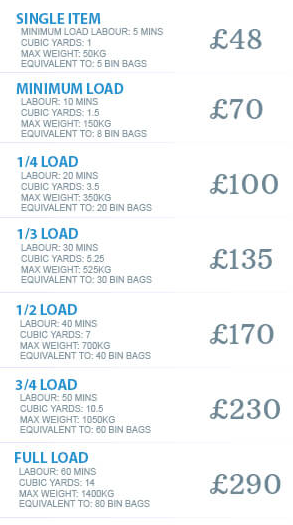
 Tipper Van - Rubbish Removal and Waste Collection Prices in Dulwich, SE21
 Luton Van - Rubbish Removal and Waste Collection Prices in Dulwich, SE21